
Orthodontics is no longer a teenage concern. The American Association of Orthodontists reports that one in three orthodontic patients is an adult, so many people searching for the best orthodontist near me are choosing a provider for themselves rather than following a parent’s lead.
A practice that handles teenage braces well may not suit an adult with crowns or gum concerns. Choosing well means weighing qualifications, diagnosis, treatment suitability, communication and follow-up. This guide takes each in turn.
An orthodontist is a dentist who has completed an accredited specialty program, typically two to three additional years after dental school. A general dentist may also provide orthodontic care, often with clear aligners or limited-scope braces, and many do so competently. The distinction matters because you should know what training stands behind your plan.
Ask which clinician will actually diagnose and supervise your care. Check the licence through the Dental Board of California’s online lookup, and confirm any specialty claim directly. Professional membership is a supporting signal, never a guarantee of quality.
Some practices treat mostly teenagers and others see more adults, so ask whether you need an orthodontist for adults or an orthodontist for children. Ask how often the clinician handles cases like yours.
A useful consultation establishes what is happening in your mouth before proposing a solution. The clinician should assess tooth alignment, your bite, jaw relationships and the health of your teeth and gums. Photographs, X-rays or digital scans may be used where clinically appropriate, though not every patient needs every record.
You should be able to explain what was found and why an approach was recommended, with realistic expectations and alternatives discussed. Ask to see the findings, such as photographs or X-rays, so the explanation is tied to your own teeth rather than a rehearsed script. Be wary of any provider who promises a specific result or an unusually short timeline before examining you.
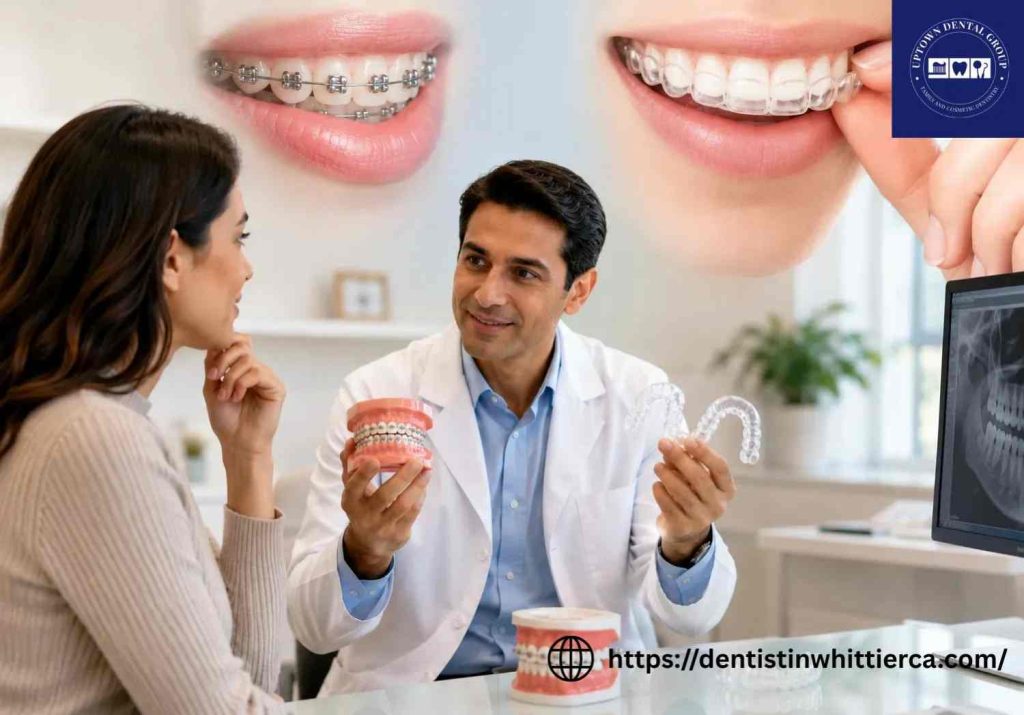
Metal braces, ceramic braces and aligners each have a place. Aligners are less noticeable and removable, but they only work if worn consistently and are not suitable for every case. Fixed braces can suit some bite corrections because they do not depend on how often you wear them.
Ask why the clinician considers one option suitable for your teeth, and what upkeep and limitations come with it. No option is superior for everyone.
Orthodontic treatment cost is rarely a single figure, so a low quote means little until you know what it covers. Ask whether the fee includes diagnostic records, routine appointments, replacement appliances, aligner refinements and retainers. Compare quotes line by line rather than by the headline figure, because two practices may bundle different things.
Check your insurance benefits beforehand, since coverage varies by plan and is never guaranteed. Ask for payment plans, including any down payment, and extension policies in writing.
Treatment lasts many months, so the practical side counts. Find out who deals with a broken bracket or an aligner that no longer fits, and how urgent problems are handled outside normal hours. Clear instructions and timely replies often matter more day to day than the appliance itself.
Read online reviews for patterns about communication and waiting times, not as proof of skill. Before-and-after photographs show what was achieved for someone else and cannot predict your result. Scanners and monitoring software can assist assessment, but equipment alone does not make a provider better qualified.
Bring these to each consultation and compare the answers:
Retainers deserve attention, since teeth can move back after braces come off. They are part of treatment, not an optional extra.
The strongest choice rests on verified training, an examination that explains its reasoning, an option matched to your case, a fee you understand and a practice that stays reachable. Apply the same criteria to every practice, and consider seeing two or three before deciding. Taking notes at each visit makes later comparison easier.
At Uptown Dental Group, we encourage patients to discuss their orthodontic concerns, available treatment options and individual needs during a consultation. If you are comparing an orthodontist in Whittier, CA, you can read about our orthodontic services or arrange a visit to ask any of the questions above.
Look up the clinician’s dental licence through California’s official licensing records. A licence confirms authority to practise, not specialty status, so also ask directly about postgraduate orthodontic training.
Orthodontists complete additional specialist training, while some general dentists also provide orthodontic care. Match the clinician’s experience to your case, and ask how often they treat similar problems.
Yes, adults can have orthodontic treatment. Suitability depends on tooth and gum health, your bite and your goals, so an examination is needed before anyone can say which option fits.
Expect an examination, a conversation about your concerns and, where appropriate, photographs, X-rays or scans. You should hear about options, estimated duration and costs, though the exact process varies with your needs.
Get the full fee in writing and ask what it covers. Check insurance, payment plans, and whether retainers or any extra visits cost more.

